Christian Furry Fellowship Logo
  • CFF
  • Resources
  • Blog
  • About
  • Contact
  • Support
To Telegram
To Discord
  • Advent: The Season of Hope

    Advent: The Season of Hope

    Why do we even have Advent season at all? Why not start with the joy of Christmas? Advent doesn’t start with a celebration, but by us sitting in the dark, waiting. The first week of Advent marks it out as a season of Hope and that’s where hope really begins: in the dark, waiting.

    When we use the term “hope” nowadays, we tend to mean that we’re wishing for something good or wanting circumstances to improve. Hope is a feeling of optimism when things look favorable. As much as this sort of hope is a positive feeling and emotion, it really just boils down to “desire without certainty” or maybe a better way to put it, is that hope is the longing for something that is mixed with doubt.

    But what does the Bible mean by Hope?

    The first candle of Advent, Biblical hope, is different. When it’s lit, the room may still be dark, but the light of hope’s candle stands firm: this darkness is not the last word, Light is on its way.

    The prophets in the Old Testament spoke to God’s people who had found themselves in deep darkness of troubling times and circumstances, when it seemed there was no reason left to hope. But God sent promises into that darkness and those promises were enough to keep His people going. Biblical hope isn’t about what we feel, but about Who God is—it’s grounded in His character and nature.

    Our modern hope is weak when it matters because it depends on circumstances—if things start looking up, then we get optimistic, or maybe even a little naive. But if things start looking off… well, this sort of hope is very often fragile, easily lost when life starts getting difficult. Because this hope is nothing more than wishful thinking, it has nothing to draw on and so, like a candle without any tallow to support the wick, it quickly goes out when the winds of circumstance change direction.

    Hebrews 6:19 calls our hope in Christ “an anchor for the soul” – anchors aren’t built to stop storms, but to hold us steady through them. So unlike modern hope, Biblical hope says to itself “I know God will be faithful, because He always has been.” 

    It’s the sort of hope that doesn’t depend on mood or feelings, but instead depends on a God who is faithful, who keeps His promises.

    Advent is the season of the year where we learn again how to hope and how to wait. We aren’t waiting to see if God will show up, but waiting because we have seen Him show up in the past with the promise that He will continue to show up for us. So our waiting, our hoping, isn’t something passive. It’s actively watchful and expectant.

    Jude

    November 30, 2025
    Christian Living
  • The Gospel

    If you’re around Christians for any period of time, you’ll definitely hear the word “gospel” tossed about. This obscure word seems to form the basis of a lot of what we talk about, if we’re honest. So what is the Gospel exactly? And why is this ‘Gospel’ important to us, Christians? 

    Simply put, the Gospel is the good news that God has come into the world in the person of Jesus Christ to save sinners and to reconcile the world to Himself. The Message of the Gospel is simple enough to be related in a few paragraphs, or even in a few sentences! But it’s also a message of hope, new life and reconciling generosity that has changed the lives of hundreds of millions and studied by the greatest minds of many generations for the last two thousand years.

    Jesus came into Galilee, proclaiming the gospel of God, and saying, “The time is fulfilled, and the kingdom of God is at hand; repent and believe in the gospel.” -Mark 1:14-15

    “Now I would remind you, brothers, of the gospel I preached to you, which you received, in which you stand, and by which you are being saved, if you hold fast to the word I preached to you—unless you believed in vain. For I delivered to you as of first importance what I also received: that Christ died for our sins in accordance with the Scriptures, that he was buried, that he was raised on the third day in accordance with the Scriptures…” -1 Corinthians 15:1-4

    The word “gospel” itself means good news, in the sense that we’ve been waiting for a report from far away that gives us hope or a renewed anticipation. When this news comes to us, we may have been “waiting” so long that we’ve forgotten, or perhaps we just aren’t aware of the current state of affairs anymore, and the news doesn’t seem all that exciting. We need this good news to stir up our hearts, open our eyes and shake us awake. Some would even say that we need the Gospel to raise us from the dead! 

    So, what’s the content of this Good News then? What is it that the Gospel actually tells us?

    First, we need some background! 

    “Worthy are you, our Lord and God,
        to receive glory and honor and power,
    for you created all things,
        and by your will they existed and were created.”
    -Revelation 4:11

    We are introduced to the Main Character of this Good News right at the start: God Himself. The underlying basis of the Gospel is that God is the one true, loving ruler of all things, by virtue of Him creating everything. Unlike many human rulers we deal with today, God is not corrupt or rotten. He is not self-serving and ultimately lives for and in pursuit of the well-being of others. He is a completely good and loving ruler, generous in His provision and always just and fair with His rule. All of Creation finds its Source and its Maker in God.

    To repeat the point: this is God’s world. He made it, and He’s in charge. But here’s the fascinating side to all this: God wants to share all of this with us. In the beginning, God, in His loving care, and His desire to share His own life with others, created a wondrous world with many different creatures. From spiritual beings who resembled Him in might and wisdom, to the inhabitants of the seas and skies, to the land creatures we are all familiar with. And also God made us.

    God created human beings and gave us a unique place in Creation. You’d expect that someone in charge would use his position to lord over others, but God is different, instead installing human beings as partners in ruling this world, working with Him to care for it, to be responsible for it as a way of honoring Him and obeying Him as our King and as thanks for His generosity.

    But even though this is how God created things to be, it’s pretty clear that isn’t how the world is now. What happened?

    All we like sheep have gone astray;
        we have turned—every one—to his own way
    -Isaiah 53:6a

    To repeat: God created the world and installed human beings as his partners in ruling the world by his wisdom and love. But like in any partnership, this means that human beings will need to trust his wisdom over their own.

    In our foolishness and rebellion, Humanity (as a species and as individuals) has demonstrated time and time again that we would rather do things our own way than trust God’s wisdom. Everything that is wrong in our lives and in the world stems from those wrong choices Humanity has made, not just corporately as a species, but individually as well. Rather than trust God and His Wisdom, we don’t want God to be our ruler. So we reject Him as God and try to determine good and bad for ourselves, deciding to live our own way.

    In some way, we all do this.

    Most of us just ignore God or keep him far away. I mean, we’ve got our own lives to live. We can’t have God complicate things even more, right? So instead of the intimacy and partnership that God created us for, we stay away and we rebuff His love for us. We don’t thank Him as we ought for being our provider and creator, and we certainly don’t honor or trust the instruction He gives us. Instead of trusting His goodness, we follow our own desires and priorities. Instead of allowing His wisdom to guide us, we live by the values we decide are best (whether religious, secular, or a mix of both).

    The Bible calls this stance towards God “sin,” and we all operate in this stance in some way—whether we follow a particular religion, faith or law code, or follow none at all. In fact, you’ll notice that it’s not really the things we do, but that stance in our hearts (that give rise to those things we do) that so opposes God.

    So we’ve gone from a world of creatures exalted into a grand commission by God to be His partners, His friends and His family to a world full of little rival “gods,” each of us doing things our own way, each of us trying to bend the world and other people to our own will. Each of us acting as if we’re in charge.

    How can we be surprised when such an arrangement doesn’t actually work? In removing ourselves from God’s wisdom, and in trying to determine what’s good and what’s bad on our own terms, our autonomy and freedom falls flat. And as a result, even if God never stepped in at all, we would still suffer the consequences: the damage we do to ourselves, the damage to the people around us, and the damage to the world we live in. Worst of all, often we are even blind to this very damage around us.

    So then each of us will give an account of himself to God. -Romans 14:12

    Like any good ruler, God cares enough to take our rebellion seriously. He respects our dignity as individuals and thus, God holds us accountable for our actions. It really does matter to Him that we dishonor Him, that we treat other people so poorly, and that we ruin His world.

    In other words, God won’t let our rebellion go on forever. It would be unjust of him to do so.

    We experience God’s justice against our rebellion in the reality of death and all the forms that death takes.

    God was very upfront with us, telling humanity that if we started to determine good and bad for themselves, we would die. And it’s true. When we trust our own wisdom over God’s we have an amazing track record of doing things poorly, causing our relationships with one another and with God to break down and die. Often we see this sort of death as violence or injustice to others. The natural end result of doing things our own way is the destruction of others, the ruining of our relationships and accruing of a debt that we have with God. Doing things our own way also means disconnecting from the source of Life in a deep way that brings physical death into our lives.

    But there is further justice that we will face. God, being the good and just King of the world must deal with rebels in order to protect those who have remained loyal and to defend His honor. We will all one day stand before Him and give account to him for our lives: for the damage we have done, and for our personal rejection of him as our ruler.

    The sentence God will enact on that day will be to give us what we have asked for: we haven’t wanted God as our ruler and have sought to replace Him with ourselves. We have rejected His wisdom, doubted His goodness and have been apathetic toward his generosity and love. In short, we have asked for God to go away. We have asked, in our rebellion, to not be a part of God’s life.

    And so, He will cut us off from Himself permanently. But since God is the source of life and all good things, being cut off from Him means a destruction that never ends, a death that cannot be recovered from.

    Falling under the sentence of God’s justice against our rebellion is a terrible thing. It’s an impending destiny we all face, because we’re all guilty of rebelling against God. This is hard to hear and accept. And it means that we are all in deeper trouble than we could ever imagine. But it’s not the end of the story, either.

    God loves His Creation and, even more, He loves us human beings. God has firmly determined that human beings will always be an intimate part of His life, so He didn’t leave us to suffer the consequences of our rebellion, but He sent His own divine Son into the world, becoming a human being, to save us: Jesus Christ.

    Unlike us, Jesus didn’t rebel against God. He always lived by trusting God’s goodness and generosity. Instead of trying to determine good and bad for Himself, Jesus always relied on God’s Wisdom. And in doing so, He lived a life full of love for God and for others, giving honor and thanks to God, and loving other people deeply, being moved to serve and help them. 

    Jesus was the faithful and loyal partner to God that all humans were created to be, therefore, He didn’t deserve God’s justice against rebellion in any way. He didn’t deserve to die.

    But Jesus did die. Although He had all the power of God to heal the sick, call down armies of angels, restore families and even raise the dead, Jesus allowed himself to be executed on a Roman cross. Why?

    The amazing part of the Gospel is that Jesus died as a substitute for rebels like us. Jesus took the justice against and the consequences of our wrongdoing on Himself by dying on the cross in our place. Death is the punishment for and the consequences of rebellion, and He died our death, for us as if he were one of us.

    All this is entirely undeserved by us, after all we rejected God. But because of His great love, God sent his Son to die for us – a true gift to us.

    Blessed be the God and Father of our Lord Jesus Christ! According to his great mercy, he has caused us to be born again to a living hope through the resurrection of Jesus Christ from the dead… -1 Peter 1:3

    But there’s more to the story of course. Jesus didn’t just merely die, and that was it. God accepted Jesus’ death as payment in full for our sins, and raised Him from the dead. Jesus defeated death, and God raised Him from the grave up to be what humanity was always meant to be: the ruler of God’s world.

    As God’s Chosen Ruler, Jesus has also been appointed as God’s judge of the world. When Jesus returns and He confronts the rebellion in the world with divine finality, Jesus Christ will be the one calling all humans to account for our mutiny against God.

    But Jesus is not only God’s appointed king and judge; He is also the savior from judgment. Because of His death in our place, he now offers to forgive all our sins. (They’ve already been paid for after all.) We can now make a fresh start with God, no longer as rebels but as loyal friends, co-rulers with Jesus and intimate family, giving all thanks and honor to him. 

    In this life that Jesus offers, God himself comes to live within us by His Spirit. We can experience the joy of a new relationship with God. Through the Spirit we can become the same sort of faithful partners to God that Jesus is, trusting God’s Wisdom, relying on His goodness and generosity to fuel our love for Him and for others.

    And when Jesus does return in all his glory, we can be totally confident that we will be acceptable to Him and to God—not because we deserve to be, like we’ve earned or worked out our goodness, but because Jesus took our punishment and the consequences of our sin by dying in our place.

    Whoever believes in the Son has eternal life; whoever does not obey the Son shall not see life, but the wrath of God remains on him. -John 3:36

    So what do we do now? Well, there are two very clear roads stretching from this spot:

    The first road is to continue living in rebellion against God—ignoring him and (trying) to run our own lives our own way. 

    The end result of living this way is the inevitable and rightful justice of God. We not only have to put up with the damaging consequences of rejecting God ‘s goodness and wisdom here and now, but we face an eternity of separation from Him.

    But there is another road. If we turn to God and ask for forgiveness, trusting in Jesus as the risen ruler and savior, then everything changes.

    To begin with, God offers us a fresh start. It’s like we become part of a Genesis 1 of a New Creation that isn’t quite here yet. He takes Jesus’ death as the full payment for our sins and forgives us entirely and unconditionally. God fills our hearts with His Spirit, allowing us to know Him and giving us new divine life that can’t be destroyed by death. No longer are we in rebellion, but rather, we become members of God’s own family, living under the rule and protection of His Son, Jesus.

    If you’re not quite sure what to do next, that’s okay. You don’t have to have it all figured out today. But I encourage you to keep exploring, keep asking questions, and stay open to what God is saying to you by His Word and through His Spirit. It’s not just about hearing the message once—it’s about discovering what a life with Jesus truly looks like.

    Have questions? Let us know and we’ll be here to walk with you along the way.

    Inspired by the Gospel presentations of Two Ways to Live and BibleProject

    Jude

    February 11, 2025
    Bible Studies, Christian Living, Gospel, Salvation, Theology
    Eternal Life, Faith, God’s Kingdom, Jesus
  • Advent: The Season of Peace

    Have you ever looked at your social media feed or the local news and think that the world just isn’t what it ought to be? With wars, disasters and environmental issues making headlines, political figures and powerful personalities seeming to control at every facet of life, something always feels “wrong.” On a smaller stage, we don’t need anyone to tell us that even our personal worlds aren’t what they should be: friends sometimes betray friends, people disappoint one another, even your own mind can feel like it’s out to sabotage everything you do. Something, again, always feels “wrong.”

    As we work our way through the Bible, we encounter an idea called shalom (or peace). It’s the idea of wholeness, and everyone and everything fitted and working together as intended. Sure, if two people aren’t fighting, they are “at peace” but wholeness is more than just a lack of hostility. It’s that sense of well-being and flourishing when everything is ordered and in place. Shalom is not just a peace that keeps things from being broken, but speaks of a peacemaker that repairs where that harmony has been lost.

    The Creation was made in true harmony with God’s intent for all things, and then as a grand gift, God granted rule and stewarding dominion of Creation to Humanity. In turn, Humanity was invited to sit with God, to rule with Him, and govern the harmonious world that God had created. But as a species and as individuals, we declined the invitation and squandered our gifts, disrupting the harmony and peace between us and God, Creation, and each other.

    In one of His titles in Isaiah 9, the Messiah (the King of God’s Kingdom who He sends to confront evil and to purify His people) is called the prince of peace. We Christians know this is Jesus, and as we work our way through the Gospels, we always see Jesus reversing the disharmony and its effects and re-inviting human beings to join with God in ruling the world under God’s priorities of wisdom and love.

    True wholeness and shalom starts within us, but it’s not something that we can produce on our own. Just like a broken and out of tune violin can’t play a proper tune, human beings cannot produce true peace when disconnected from our Creator. For those who know Him, Jesus restores the peace between us and God first, and the Spirit nurtures this peace in our lives. His Presence of peace grounds us even when all around us is broken, hostile or disharmonious. And since the peace and shalom that Christ gives is not dependent on our circumstances but on Himself, we can be empowered to extend this peace and the invitation to true peace to others by being peacemakers in our lives.

    The Advent season reminds us, as we wait in hope for the coming eternal peace in the world, that we can be peacemakers in our personal worlds today, following in the footsteps of the Prince of Peace Himself. 

    Jude

    December 7, 2025
    Christian Living
    Advent, Jesus
  • Advent Hope: Waiting Expectantly

    It was a long time before I got a ref sheet. Money was tight, and I wanted to find just the right artist. I’d gotten a proper job and discovered an artist that I thought would be perfect, and so I got on the waiting list. The queue was slow moving, but I waited. It probably took a year to get to me. I sent out the details for my character and once work began, there were times when I wouldn’t hear anything for a while (commissions were a side hustle for the artist, and she disclaimed to everyone that commissions would not be fast). Every now and again, just when I would think maybe I was forgotten, I would get an update and that would keep me going. I didn’t get the full perfect result, but I could see it coming together. I wanted to see my reference sheet finished, truly I did…but I also wanted it to be right. At any point in the process, I could have been ghosted, the artist could have been in some accident, or she could have decided to drop the project (payment was not required until work was completed). But I hoped I would see it soon and did my best to be patient in the meantime.

    I wonder if this is somehow similar to how the Israelites felt as they waited for the promised seed: the one who would crush the serpent’s head.

    God sent several people over the years to lead or rescue them. One by one, we see in the scriptures how God would give favor to a man and that man would be used to preserve humanity or the chosen of God. Yet, each one would fail to live righteously. There were these little previews or glimpses of a Savior, but none of them the complete or perfect picture of God himself. And so the Israelites waited. They waited for the one who would finally come and be that perfect second Adam, who could deliver them once and for all from death.

    I believe that the Old Testament people who watched for the savior in obedient faith were counted righteous as Abraham was. However, they took this faith with them to their grave. I got my ref sheet, and it was worth the wait, but some of the Israelites died waiting.

    We see this used in Hebrews as the author encourages early Christians to watch hopefully and expectantly for the return of Christ.

    “These all died in faith, not having received the things promised, but having seen them and greeted them from afar, and having acknowledged that they were strangers and exiles on the earth.”

    (Hebrews 11:13)

    This advent, may we hope for Christ’s return and reflect on those who have come before us to wait, whether for the second coming… or the first. May God grant us hope. It’s not always easy. But just as confession is made, so too is hope given to our souls by the instruction of our mouths.

    Thomas

    December 3, 2025
    Christian Living
    Advent, Hope, Reference Sheet, Waiting
  • The Gospel Written in Time: A Friendly Introduction to Advent

    The Gospel Written in Time: A Friendly Introduction to Advent

    Hello everybody! Every year as we move into the Advent season, we always get a bunch of questions about Advent and the Church calendar.

    “But isn’t that Catholic stuff?”

    “Is this something that God commands us to do?”

    “Doesn’t all that ritual quench the Spirit?”

    Some are the usual fare, some are unique, but it’s always a joy to help folks understand where they fit in the redemptive story that God is taking us through. I hope that I can help introduce you to the Church Calendar and to the season of Advent itself.

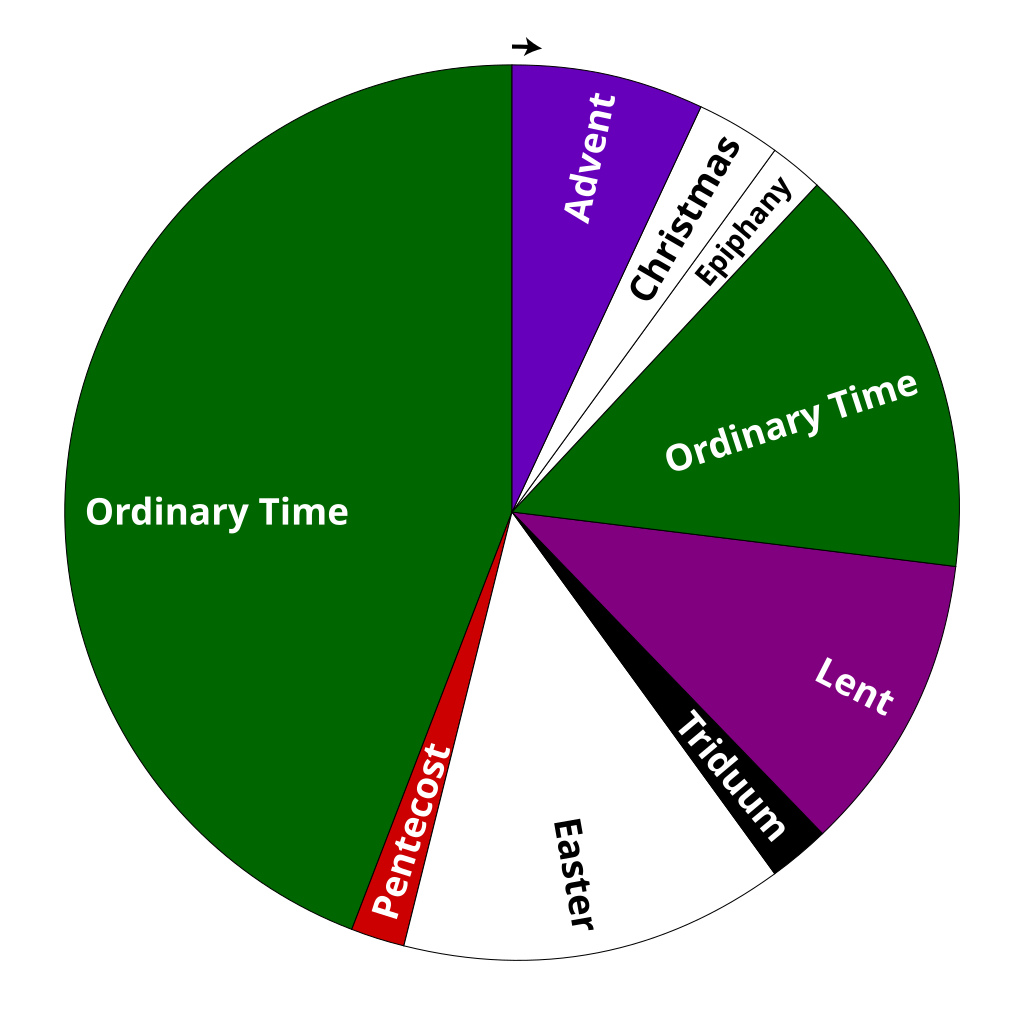
    Simply put, the Church Calendar is a gospel tract, just written in time and ritual instead of paper and ink.

    A few centuries after Jesus ascended and the Church was established, the Church’s leaders came to realize they needed to teach their congregations how to think about the Word of God in every circumstance. Unfortunately, this was still at a time when most people couldn’t read, so just telling folks to read their Bibles wasn’t really an option.

    Instead, God’s Spirit gave these church leaders the idea to use time and space to teach, very much like God’s Spirit did in the time of the Temple and the Hebrew feast days and similar to the way that creatures in the wild learn through patterns—seasons, signals, and familiar paths. God built us to respond to rhythm. So over time, every single thing about a church service, from when you stood up, to when you sang, to when you prayed, what you prayed, etc was designed to help people see the Gospel and to see Jesus in every single aspect of the Sunday service. This is what we mean when we talk about liturgy. 

    During the same time, some church leaders even took it a bit further and marked out the yearly calendar into a form of liturgy. Starting with the most important feast days they were already celebrating, the leaders of the Church marked out different parts of the year to teach important truths about God and about the Gospel. Every single part of the year reminded Christians they belonged to Jesus, Who Jesus is and what He had done for them. You knew what you were going to be learning in Church just by the date. If you weren’t learning about Jesus, you were learning about who you were in Jesus.

    So, not just the holidays themselves—like Easter and Christmas which already held deep significance—but the time leading up to them gained significance as well as if the calendar itself was a Gospel presentation or a weekly Bible devotional to be experienced each Sunday gathering.

    It wasn’t until about 150-200 years ago, very recently in fact, that churches started to leave behind this legacy. Up to then, most church services drew from this robust history of Christian liturgical practice, observing the Church calendar in some formal way. So the church calendar isn’t “too Catholic” but part of the grand history that all of us followers of Jesus are a part of. Even though we have the Bible with us, and literacy is widespread, the Church calendar is still a useful tool to help us reflect on Jesus Christ, our Savior every single day.

    Since the Church Calendar turns the year into one big devotional, where does that place Advent? What exactly is Advent anyway?

    Even though there are different versions and iterations of the Church Calendar that are observed in different ways by the major branches of Christianity, the season of Advent always marks the beginning of the Church Calendar, even though it takes place at the end of our regular year.

    If there’s one way to describe the Advent season in a way that contrasts it with the other major sections of the Church Calendar, it’s that Advent is a time of joyful expectation. Have you ever been to a convention? It’s the kind of anticipation you feel in that quiet moment before the convention doors open, when everyone is buzzing with hope and joy. Things are still not what they ought to be (after all the convention hasn’t started yet), but it all fades into the background as the time gets nearer and nearer.

    The Advent season is a month of waiting that prepares us for the advent of Jesus (“Advent” comes from the Latin word for arrival, or coming)—His birth in Bethlehem at Christmas, while also pointing forward to the Lord’s Second Coming, when he will set things right. While Advent is not Christmas, it is a time where we prepare our hearts and lives for the Gift that God has given us in His Son, as well as a time where we are  prepared as we continue to wait for His promised return. 

    Each Sunday of Advent traditionally highlights a different theme of that waiting: hope, peace, joy, and love. Again, these form a special opportunity at this time of the year to meditate and reflect on God’s goodness and faithfulness as a means of preparing ourselves. Just like there are often difficult times that stand between us and the birth of a new baby, there are going to be difficult times in our lives between us and seeing the Lord face-to-face. Think of it this way, Advent jogs our memory. We often forget we are living in-between Christ’s first coming and second coming. And as we are reminded, we are empowered to mourn that our world is still not where it should be; however we are also empowered to work with Jesus to bring peace to the world in the meantime, while being fashioned into people who know what it is to trust in God’s faithfulness as we wait for the new world to come.

    So as we march forth into Advent 2025, let’s be serious about the joy that we are waiting for. Whether you are part of a local church that lights candles or has special services or you can only celebrate Advent privately in your own heart this year, remember that Advent is the countdown before the Big Day: a sacred anticipation when we rehearse joy before He bursts into the room.

    Jude

    December 2, 2025
    Christian Living, Gospel, Theology
    Advent

Socials

  • Twitter
  • Telegram
  • Facebook
  • YouTube
  • Mail
  • Instagram
  • TikTok
  • Twitch

About

  • About Us
  • The Volunteers
  • Our Beliefs
  • Mission Statement

Events

  • All Events
  • Bible Studies
  • Cons

Resources

  • Can a Christian be a furry?
  • For Parents & Guardians
  • Articles
  • Privacy Policy

Support

  • Getting Involved
  • Donate
  • Volunteer