


Hello everybody! Every year as we move into the Advent season, we always get a bunch of questions about Advent and the Church calendar.
“But isn’t that Catholic stuff?”
“Is this something that God commands us to do?”
“Doesn’t all that ritual quench the Spirit?”
Some are the usual fare, some are unique, but it’s always a joy to help folks understand where they fit in the redemptive story that God is taking us through. I hope that I can help introduce you to the Church Calendar and to the season of Advent itself.
Simply put, the Church Calendar is a gospel tract, just written in time and ritual instead of paper and ink.
A few centuries after Jesus ascended and the Church was established, the Church’s leaders came to realize they needed to teach their congregations how to think about the Word of God in every circumstance. Unfortunately, this was still at a time when most people couldn’t read, so just telling folks to read their Bibles wasn’t really an option.
Instead, God’s Spirit gave these church leaders the idea to use time and space to teach, very much like God’s Spirit did in the time of the Temple and the Hebrew feast days and similar to the way that creatures in the wild learn through patterns—seasons, signals, and familiar paths. God built us to respond to rhythm. So over time, every single thing about a church service, from when you stood up, to when you sang, to when you prayed, what you prayed, etc was designed to help people see the Gospel and to see Jesus in every single aspect of the Sunday service. This is what we mean when we talk about liturgy.
During the same time, some church leaders even took it a bit further and marked out the yearly calendar into a form of liturgy. Starting with the most important feast days they were already celebrating, the leaders of the Church marked out different parts of the year to teach important truths about God and about the Gospel. Every single part of the year reminded Christians they belonged to Jesus, Who Jesus is and what He had done for them. You knew what you were going to be learning in Church just by the date. If you weren’t learning about Jesus, you were learning about who you were in Jesus.
So, not just the holidays themselves—like Easter and Christmas which already held deep significance—but the time leading up to them gained significance as well as if the calendar itself was a Gospel presentation or a weekly Bible devotional to be experienced each Sunday gathering.
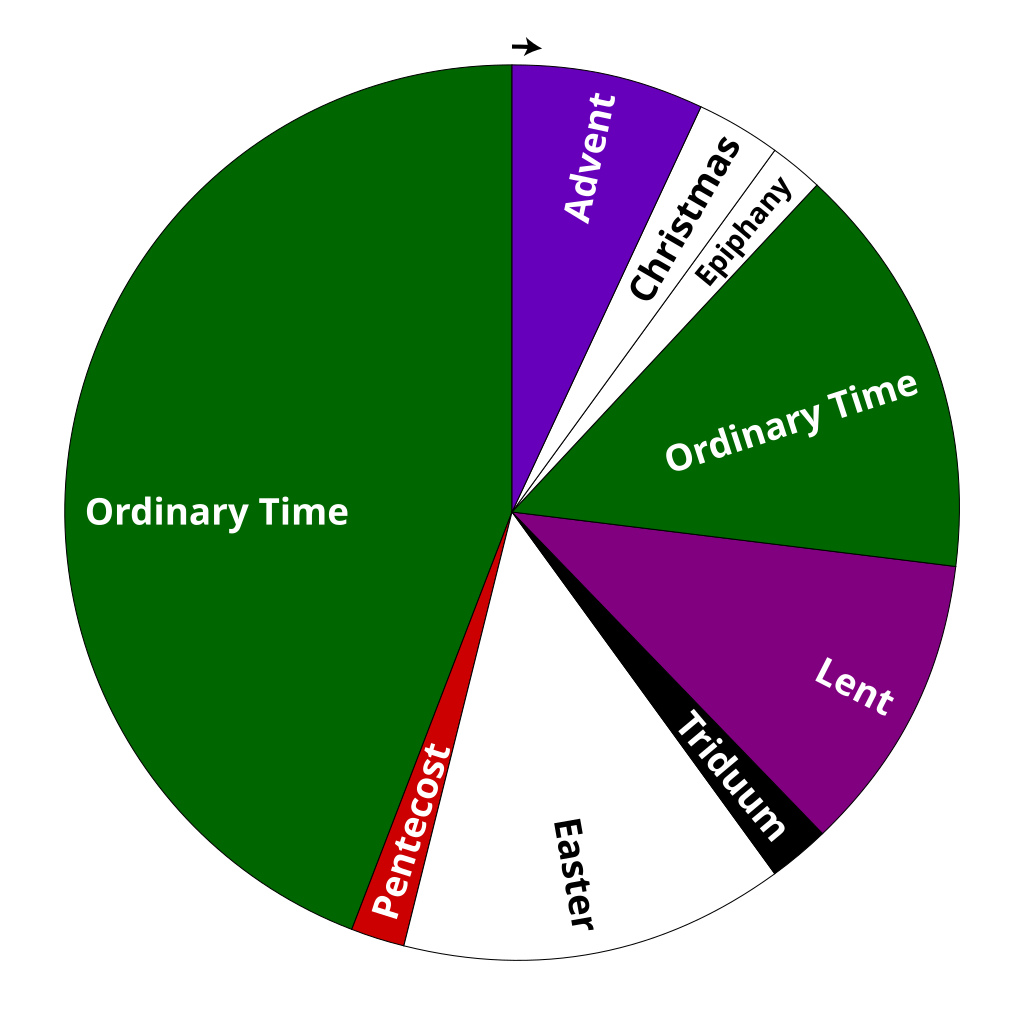
It wasn’t until about 150-200 years ago, very recently in fact, that churches started to leave behind this legacy. Up to then, most church services drew from this robust history of Christian liturgical practice, observing the Church calendar in some formal way. So the church calendar isn’t “too Catholic” but part of the grand history that all of us followers of Jesus are a part of. Even though we have the Bible with us, and literacy is widespread, the Church calendar is still a useful tool to help us reflect on Jesus Christ, our Savior every single day.
Since the Church Calendar turns the year into one big devotional, where does that place Advent? What exactly is Advent anyway?
Even though there are different versions and iterations of the Church Calendar that are observed in different ways by the major branches of Christianity, the season of Advent always marks the beginning of the Church Calendar, even though it takes place at the end of our regular year.
If there’s one way to describe the Advent season in a way that contrasts it with the other major sections of the Church Calendar, it’s that Advent is a time of joyful expectation. Have you ever been to a convention? It’s the kind of anticipation you feel in that quiet moment before the convention doors open, when everyone is buzzing with hope and joy. Things are still not what they ought to be (after all the convention hasn’t started yet), but it all fades into the background as the time gets nearer and nearer.
The Advent season is a month of waiting that prepares us for the advent of Jesus (“Advent” comes from the Latin word for arrival, or coming)—His birth in Bethlehem at Christmas, while also pointing forward to the Lord’s Second Coming, when he will set things right. While Advent is not Christmas, it is a time where we prepare our hearts and lives for the Gift that God has given us in His Son, as well as a time where we are prepared as we continue to wait for His promised return.
Each Sunday of Advent traditionally highlights a different theme of that waiting: hope, peace, joy, and love. Again, these form a special opportunity at this time of the year to meditate and reflect on God’s goodness and faithfulness as a means of preparing ourselves. Just like there are often difficult times that stand between us and the birth of a new baby, there are going to be difficult times in our lives between us and seeing the Lord face-to-face. Think of it this way, Advent jogs our memory. We often forget we are living in-between Christ’s first coming and second coming. And as we are reminded, we are empowered to mourn that our world is still not where it should be; however we are also empowered to work with Jesus to bring peace to the world in the meantime, while being fashioned into people who know what it is to trust in God’s faithfulness as we wait for the new world to come.
So as we march forth into Advent 2025, let’s be serious about the joy that we are waiting for. Whether you are part of a local church that lights candles or has special services or you can only celebrate Advent privately in your own heart this year, remember that Advent is the countdown before the Big Day: a sacred anticipation when we rehearse joy before He bursts into the room.